中文简体
 English
 Español

Contenido
RG6 and RG59 are both 75-ohm coaxial cables, so they share a family resemblance and can sometimes be made to work in the same system. The practical difference is not just the label printed on the jacket. RG6 generally uses a larger center conductor, a larger foam dielectric, and heavier shielding, which helps it carry video and data farther with less loss. RG59 is thinner and more flexible, which keeps it useful for short patch runs, tight cabinets, and older analog CCTV work. For a new installation, RG6 is usually the safer starting point. For repair work or a very short run, RG59 may still be the practical choice.
RG6 vs RG59 at a Glance
| Feature | RG59 | RG6 |
|---|---|---|
| Nominal impedance | 75 ohm | 75 ohm |
| Center conductor | Typically 20 AWG | Typically 18 AWG |
| Dielectric and diameter | Smaller, often solid or foam | Larger foam dielectric |
| Shielding | Often single braid or foil plus braid | Commonly foil plus braid with higher coverage |
| Flexibility | Thinner and more flexible | Thicker and less flexible |
| Signal loss | Higher per unit length | Lower per unit length |
| Typical best use | Short analog CCTV, legacy video, patch leads | CATV, satellite, CCTV, HD-SDI, longer runs |
| Connectors | F-type or BNC, sized for RG59 | F-type or BNC, sized for RG6 |
The table is a quick orientation, not a final specification sheet. Two cables sold as RG6 or RG59 can still differ in shield coverage, jacket material, conductor type, and attenuation. Those details matter once the cable has to survive a real installation.
What the RG Rating Really Means
RG is a legacy reference system, not a modern performance grade. It tells you that a cable belongs to a familiar family with a nominal impedance and a general size, but it does not promise a particular bandwidth, shield effectiveness, or loss figure. In video work, the important starting point is the 75-ohm impedance. Both RG6 and RG59 are 75-ohm cables, while 50-ohm cables belong to a different RF world and should not be mixed into a 75-ohm video path by accident.
That shared impedance explains why RG6 and RG59 can use similar connector styles and why one cable may appear to replace the other in a short test. It does not mean they perform the same over distance, in crowded equipment racks, or in high-interference environments.
RG59: The Flexible Legacy Cable
RG59 uses a smaller center conductor, typically 20 AWG, surrounded by a smaller dielectric. That makes the cable thinner, lighter, and easier to bend around tight corners. In older analog CCTV systems, short video patch runs, and retrofits where the existing connectors and cable trays are sized for a slim cable, RG59 can still be a sensible fit.
Where RG59 still makes sense
- Short analog video runs inside a cabinet or equipment room.
- Legacy CCTV repairs where the existing cable type and connectors are already RG59.
- Tight spaces where a thicker RG6 cable would be difficult to route without kinking.
The limitation is distance. RG59 has higher attenuation per unit length, so the signal weakens faster as the run gets longer. Its smaller shield package also offers less margin against interference in busy electrical environments. For a long HD video run, a new satellite feed, or a modern CCTV installation, RG59 is rarely the first choice.
RG6: The Modern Workhorse
RG6 steps up to a larger center conductor, typically 18 AWG, and a larger foam dielectric. That construction lowers resistance and attenuation, while the foil-plus-braid shield usually provides stronger protection against outside noise. The result is a cable that can carry higher frequencies over longer distances with more headroom.
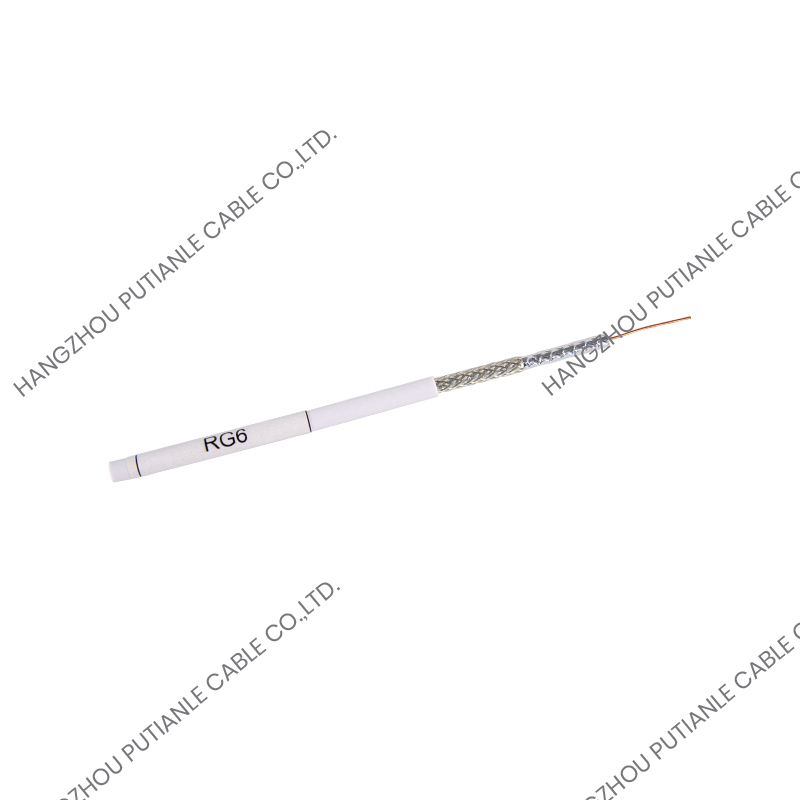 RG6 75-Ohm Coaxial Braiding CableWorth viewing where longer or digital runs need lower loss than a patch lead; 75-ohm RG6 with copper conductor, foam dielectric, and foil-plus-braid shielding.View Product →
Why RG6 usually wins
- Lower signal loss per 100 feet than a typical RG59.
- Better shielding for crowded racks, long wall runs, and urban RF environments.
- More suitable for CATV, satellite, HD-CVI/TVI/AHD, and HD-SDI video.
RG6 is not automatically the right cable everywhere. It is thicker, stiffer, and less forgiving of tight bend radii. Connectors must match the cable diameter and shield style, and a poor compression fitting can ruin the advantage of a good cable. Still, when the run is longer than a patch lead or the signal is digital and less tolerant of loss, RG6 is usually the more dependable choice.
The Differences That Matter in Real Installations
Signal loss and distance
The center conductor and dielectric set the baseline for loss. RG6's larger conductor and foam dielectric usually give it lower attenuation, so it can cover more distance before the signal needs amplification or equalization. RG59 may be perfectly acceptable for a few feet inside a rack, but it becomes a compromise on a long wall run or a rooftop feed.
Shielding and interference
Shielding quality varies within both cable families, but RG6 is more commonly built with a foil layer plus a braid. That combination blocks more high-frequency noise and helps keep the signal inside the cable. RG59 often relies on a lighter shield, which is one reason it is less comfortable in electrically noisy places.
Size, bend radius, and connectors
RG59 is easier to pull through tight spaces and around small corners. RG6 needs a more generous bend radius and firmer support. The connectors must match the cable, not just the name on the jacket. An F-type or BNC connector sized for RG59 will not grip RG6 properly, and an RG6 connector on RG59 can create a poor shield bond and unreliable contact.
Bandwidth and digital video
Both cables can pass video, but RG6 has more usable bandwidth and lower loss at higher frequencies. That matters for satellite IF signals, cable TV channels, and digital video formats that pack more information into the cable. RG59 can still handle short analog video, but it is a weaker match for long HD runs or high-channel-count systems.
Matching the Cable to the Job
For a short analog CCTV lead inside a rack, RG59 may be the easier cable to dress and terminate. For a new CCTV installation using HD-CVI, TVI, or AHD, RG6 is generally the better choice because it gives more margin over distance. For satellite and CATV distribution, RG6 is the standard starting point. For HD-SDI, use a true 75-ohm video cable with known loss figures and keep the run as short as the signal budget allows.
For very long 75-ohm feeder runs or high-interference environments, a larger aluminum-tube cable such as QR540 can be a better fit than either RG6 or RG59. It is less flexible and needs different handling, but its electrical performance suits trunk and feeder work where loss and shielding are critical.
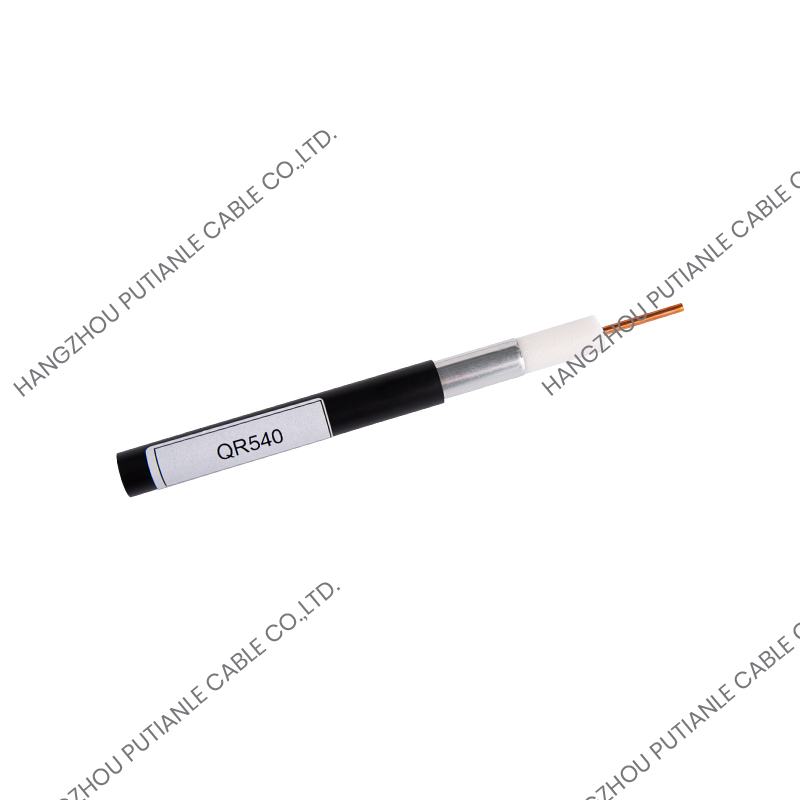 QR540 75-Ohm Aluminum Tube Coaxial CableFor long feeder runs or high-interference sites, this 75-ohm aluminum-tube cable offers low-loss signal transmission and a UV- and abrasion-resistant jacket.View Product →
If the existing system is already wired with RG59, do not replace every cable simply because RG6 is newer. Replace the runs that show poor signal, physical damage, or excessive length, and leave short, healthy legacy runs alone when they test cleanly.
Installation and Testing Tips
- Confirm the system impedance before buying cable or connectors; 75-ohm video systems should stay at 75 ohm.
- Choose connectors sized for the exact cable jacket and shield construction, not just the RG number.
- Respect the bend radius. A kinked RG6 cable can show a good continuity test and still fail at higher frequencies.
- Use compression connectors and a proper prep tool. A loose braid or a nick in the center conductor is a common source of intermittent faults.
- Test the finished run with a cable tester or TDR where possible, and leave a small service loop at each end.
A Practical Buying Checklist
- Check the required impedance and signal type before choosing RG6 or RG59.
- Match the jacket to the environment: indoor, outdoor, plenum, or direct burial as required.
- Look at shield construction and attenuation, not only the RG label.
- Buy connectors and cable as a matched pair from the same specification.
- For a wider look at coaxial cable families, see our guide to coaxial cable types.
Final Thoughts
RG6 and RG59 are close relatives, but they are not interchangeable in every installation. RG6 is the stronger general-purpose choice for longer runs, digital video, satellite, and CATV, while RG59 remains a flexible option for short analog work and legacy repairs. Match the cable to the distance, the signal, the connectors, and the environment, and the choice becomes much clearer than the RG number alone suggests.